
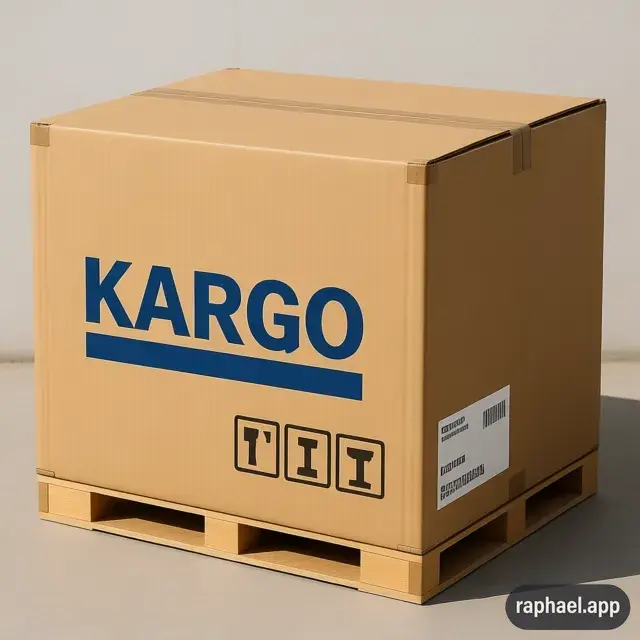
Shipping Box Size Guide: How to Choose the Right Size?
In the e-commerce sector, choosing the right shipping box is crucial for ensuring your product reaches the customer safely, securely, and economically. Incorrect size selection can lead to problems such as product damage, high shipping costs, and customer dissatisfaction.
This guide answers questions such as how to determine shipping box dimensions, which size should be preferred for which product, and what to consider to reduce shipping costs.
How to Calculate Shipping Box Dimensions?
Shipping boxes are generally measured as follows:
Width x Length x Height (cm)
Width: The short side of the box
Length: The long side of the box
Height: The distance between the base and the lid
When measuring, pay attention to whether you are measuring the inside or outside. The inside dimensions are usually used when placing the product.
How to Choose the Right Shipping Box Size?
1. Accurately Measure the Product
Measure the width, length, and height of the product.
Allow extra protection for fragile products.
Take into account bubble wrap, kraft paper, or other padding materials.
Recommendation: Adding at least 2-3 cm of protective margin to each side of the product is a safe choice.
2. Don't Forget the Shipping Companies' Volume Calculation
In Türkiye, major shipping companies (e.g., Yurtiçi Kargo, Aras Kargo, and MNG Kargo) usually calculate shipping costs based on volumetric weight (desi).
The formula for calculating volumetric weight (desi):
Length x Width x Height / 3000
If the box is chosen larger than necessary, the volumetric weight (desi) increases, raising shipping costs.
Therefore:
Choosing a box that will not compress the product,
and will not leave unnecessary empty space,
is ideal in terms of cost.
Shipping Box Recommendations by Product Type
Small Products (Accessories, Cosmetics, Electronic Parts)
Recommended dimensions:
10x10x5 cm
15x10x8 cm
20x15x10 cm
Advantages:
Low volume
Less filling required
Cost-effective
Medium Products (Textiles, Shoes, Books)
Recommended dimensions:
30x20x10 cm
35x25x12 cm
40x30x15 cm
For textile products, minimizing empty space reduces costs.
Large Products (Household Appliances, Electronics, Fragile Items)
Recommended dimensions:
50x40x20 cm
60x40x40 cm
Custom-made boxes
For these products:
Double-walled cardboard boxes should be preferred.
Shock-absorbing padding material should be used.
Single-Walled or Double-Walled?
Single-Walled Box
Suitable for light to medium weight products.
Preferred for textiles and small electronic products.
An economical solution.
Double-Walled Box
Suitable for heavy products.
Preferred for fragile products.
More secure for long-distance shipping.
As weight and fragility increase, the need for durability also increases.
Common Mistakes When Choosing Shipping Boxes
Choosing a box that is too large
Not using inner padding
Not taking product weight into account
Choosing the wrong type of corrugation
Not checking the volumetric weight (desi) calculation
Professional Tips to Reduce Shipping Costs
Determine fixed box dimensions for standard products.
Analyze your product range and switch to 3-4 main box sizes.
Avoid packaging that creates unnecessary volume.
Reduce unit cost by purchasing boxes in bulk.
Achieve a perfect solution by choosing custom-made boxes.
The Ideal Boxing Strategy for E-Commerce
Successful e-commerce companies:
Create standard box sets suitable for their products.
Regularly analyze shipping costs.
Prefer durable yet economical boxes.
Enhance customer experience with branded boxes.
The Right Box, Lower Costs, and Less Damage
Choosing the right shipping box is not just a packaging choice; it's a strategic decision in terms of cost, customer satisfaction, and brand image.
By determining the most suitable size for your product:
You can reduce your shipping costs,
Lower the product damage rate,
Increase customer satisfaction.
For shipping box sizes and custom-made box options, you can review solutions tailored to your needs on kolici.com.
